

Headaches caused by neck problems happen because the nerves of the upper neck share a relay point with the nerves that carry pain from the head and face. When joints, muscles, or other tissues in the top of the neck are irritated, the brain can read that signal as head pain.
A cervicogenic headache is the formal name for a headache that starts in the neck, but neck tension also plays a role in many ordinary tension headaches. The two often look alike, which is why so many people treat the headache and never look at the neck.
This article is general education, not a diagnosis. Headaches have many causes, and a few are serious. A sudden, severe headache, a headache with neck pain after an accident or a sudden neck movement, or any headache with weakness, numbness, vision changes, confusion, or trouble speaking needs emergency care rather than home remedies.
Key Takeaways
- The upper neck and the head share pain pathways, so irritation in the neck can be felt as a headache.
- Cervicogenic headache starts in the neck, while tension-type headache often comes with neck tension that keeps it going.
- Pain locked to one side, set off by neck movement or pressure, and spreading from the back of the head forward points toward the neck.
- Specific neck and shoulder strengthening, posture changes, and regular movement have research support for reducing neck-related headaches.
- A new, sudden, or unusual headache, especially with neck pain or nervous system symptoms, needs medical evaluation first.
How Your Neck Can Cause a Headache
The top three nerves of the neck feed into the same area of the brainstem that receives pain signals from the face and forehead. Because those signals meet in one place, the brain can’t always tell where the pain started. Irritation in an upper neck joint or a tight muscle at the base of the skull can be felt at the back of the head, the temple, or even behind the eye.
Muscles are part of this picture too. One model of chronic tension-type headache proposes that head pain can be referred from trigger points in the head and neck muscles, relayed through the same brainstem pathway. In other words, a knot in the upper trapezius or the small muscles under the skull can show up as a headache.
Cervicogenic Headache: When the Neck Is the Source
A cervicogenic headache is a recognized secondary headache, meaning it’s caused by another problem, in this case a disorder of the neck. It’s less common than tension headache, with prevalence estimates of 0.4% to 2.5% of the general population and 15% to 20% of people with chronic headaches. That same review notes it often responds poorly to common headache medication, which helps explain why some people keep reaching for pain relievers without much benefit.
Tension Headaches and the Neck
Tension-type headache is a primary headache, meaning it isn’t caused by another condition. Even so, the neck is closely tied to it. In a population study of 797 adults, neck pain affected 88.4% of people with tension-type headache, compared with 56.7% of people without headaches. Neck tension may not be the root cause of every tension headache, but it often helps keep the cycle going.
Tension Headache, Cervicogenic Headache, or Migraine?
These three overlap more than most people expect, and the location of the pain alone rarely settles it. The international headache classification lists features that tend to separate cervicogenic headache from tension-type headache: pain locked to one side, a headache brought on by pressing on neck muscles or by moving the head, and pain that travels from back to front. It also notes that none of these features is unique, which is why a hands-on exam matters.
| Feature | Tension-Type Headache | Cervicogenic Headache | Migraine |
| Where it hurts | Band or pressure on both sides | One side, starting at the base of the skull and moving forward | Usually one side, often around the temple or eye |
| How it feels | Dull, pressing, mild to moderate | Steady ache, moderate, not throbbing | Throbbing, moderate to severe |
| What sets it off | Stress, poor sleep, long hours at a desk | Certain neck movements, sustained head positions, pressure on the neck | Hormonal shifts, missed sleep or meals, sensory triggers |
| Neck findings | Tight, tender neck and shoulder muscles | Reduced neck motion on the painful side | Neck pain is common during an attack |
| Other symptoms | Usually none | Sometimes shoulder or arm ache on the same side | Nausea, light and sound sensitivity, sometimes aura |
If your pain tends to settle behind your eyes, our guide to headaches behind the eyes walks through how screen strain, sinus pressure, and cluster headaches fit in. If your headaches throb and come with nausea or light sensitivity, it’s worth reading whether a chiropractor can help with migraines, since migraine is a neurological condition that calls for a physician’s diagnosis first.
Neck Problems That Commonly Trigger Headaches
A neck-related headache rarely has a single cause. These are the patterns that come up most often.
1. Irritated Upper Neck Joints
The small joints between the top vertebrae of the neck are a common source of cervicogenic headache. Stiffness or irritation there can limit how far you can turn your head and send pain up into the back of the skull, usually on one side.
2. Tight, Tender Neck and Shoulder Muscles
Tender spots in the upper trapezius, the muscles under the skull, and the muscles along the side of the neck are common in people with frequent headaches. The research is still sorting out cause and effect: one review found these trigger points are prevalent in tension-type headache, but their exact role remains unclear, and they may build up over time as a result of the headaches.
3. Forward Head Posture
Long hours over a laptop or phone pull the head forward of the shoulders and load the muscles at the base of the skull. A review of the research found that people with tension-type headache and migraine tend to hold their heads further forward than people without headaches, although the authors suggest posture more likely keeps headaches going than starts them.
4. An Old Neck Injury
Whiplash from a car accident, a fall, or a sports injury can leave the neck stiff and sensitive long after the initial pain fades. A headache that began after an injury should always be evaluated before any hands-on treatment.
5. Jaw Clenching
The jaw and neck share muscles and nerve pathways, so clenching or grinding often travels with neck tension and headaches at the temples. If your jaw also clicks, aches, or tires when you chew, see our guide to jaw clicking and when TMJ needs attention.
6. Stress and Poor Sleep
Stress tends to show up as raised shoulders and a tight neck, and poor sleep lowers the threshold for pain. Sleeping on your stomach also holds the neck rotated for hours, which many people notice as a morning headache.
How to Ease Neck-Related Headaches at Home
These steps target the neck habits most often linked to headaches. They’re a reasonable starting point for mild, familiar headaches, not a substitute for an evaluation when symptoms are new or changing.
1. Strengthen Your Neck and Shoulders
This is the step with some of the best evidence. In a randomized trial of office workers with neck and shoulder pain, just two minutes a day of resistance training with an elastic band cut headache frequency by 43% over 10 weeks. Simple shoulder shrugs, rows, and lateral raises with light resistance are a good place to start.
2. Practice Chin Tucks
Sit tall and gently draw your chin straight back, as if making a double chin, without tipping your head down. Hold for a few seconds and repeat 8 to 10 times. This works the deep muscles at the front of the neck that help hold your head over your shoulders.
3. Raise Your Screen
Set your monitor at eye level and about an arm’s length away, and bring your phone up toward eye level instead of dropping your head to it. Keep your ears roughly stacked over your shoulders.
4. Move Every 30 to 60 Minutes
Stand, roll your shoulders, and gently turn your head side to side. Short, regular breaks interrupt the static load that builds up in the neck through a long workday.
5. Use Heat on Tight Muscles
A warm compress across the back of the neck and shoulders for 15 to 20 minutes can ease muscle tension at the start of a headache.
6. Set Up Your Sleep Position
Sleep on your back or side with a pillow that keeps your neck level with your spine, and avoid stomach sleeping, which holds the neck twisted for hours.
7. Keep Going After the Headache Fades
Many people drop their exercises as soon as they feel better, and the headaches return a few weeks later. It’s the same pattern behind sciatica that keeps coming back: the routine that got you out of pain is usually the one that keeps you out of it.
8. Track Your Headaches
Note when each headache starts, where it begins, how long it lasts, and what you were doing beforehand. Patterns tied to desk time, sleep position, or specific neck movements become much easier to spot, and the record is useful to any provider you see.
When to Get a Headache Evaluated
Consider seeking care if you notice:
- Headaches that are becoming more frequent, more intense, or different from your usual pattern
- Headaches that keep returning despite a few weeks of consistent home care
- Pain-reliever use on several days a week just to get through
- A headache that began after a car accident, fall, or other injury
- Neck pain that travels into your shoulder or arm with tingling, numbness, or weakness
- A new headache pattern after age 50 (see a physician)
- A sudden, severe headache, or a headache with fever, a stiff neck, confusion, weakness, vision changes, or slurred speech (seek emergency care)
One rare cause deserves special mention. A tear in an artery of the neck, called a cervical artery dissection, can begin with neck pain and headache before any other symptom appears. It’s uncommon, but it typically causes unusual, persistent, and severe neck and head pain, and anyone who also has dizziness, double vision, unsteadiness, or slurred speech should call 911 right away. This is one of the clearest reasons a careful screening exam should come before any hands-on neck treatment.
How a Chiropractor Fits In
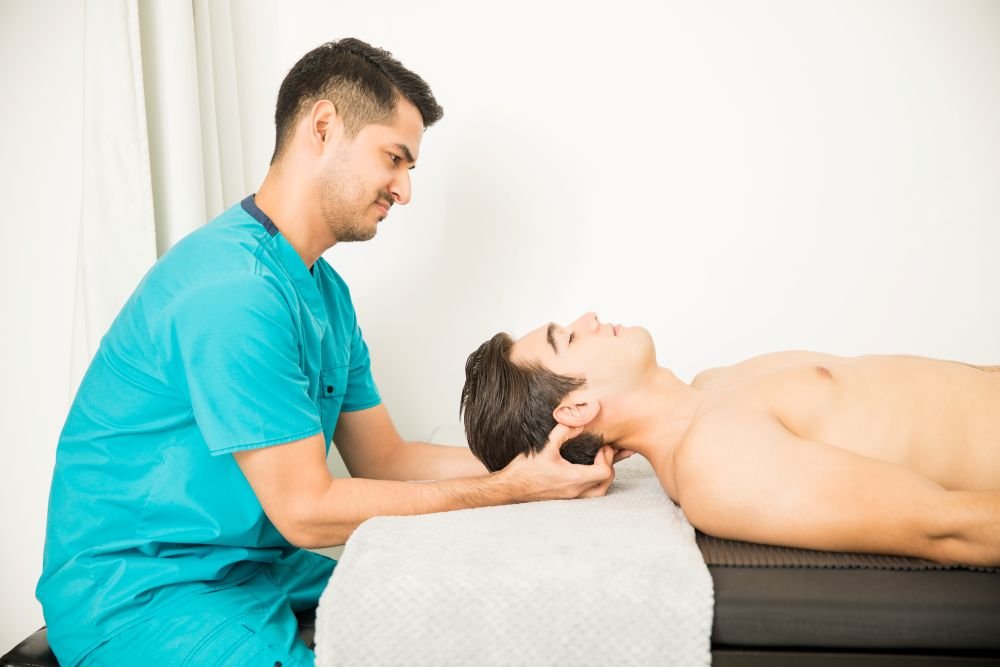
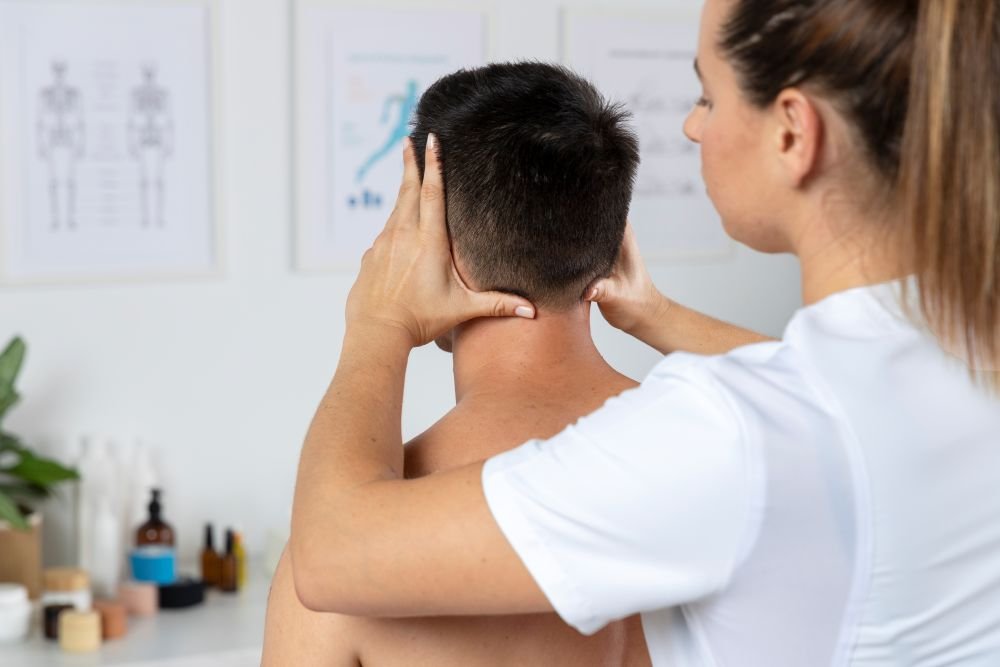
A chiropractor can take a detailed headache history, test how your neck moves, check the joints and muscles of the upper neck for tenderness, and look at posture and work habits. Just as important, that exam screens for warning signs that call for a physician instead.
The research on hands-on care for cervicogenic headache is encouraging but not definitive. In a randomized trial of 200 people, manipulative therapy and a specific low-load exercise program each reduced headache frequency and intensity, with the benefits maintained at 12 months.
Combining the two wasn’t clearly better than either one alone, and the manual therapy in that trial included gentle, low-velocity joint mobilization. That supports a measured approach: a low-force technique matched to your exam findings, paired with exercises you continue at home, rather than forceful neck twisting.
Frequently Asked Questions
Can neck problems cause headaches?
Yes. The upper neck shares pain pathways with the head, so irritated joints or tight muscles in the neck can be felt as a headache, most often at the back of the head, the temple, or behind one eye.
What does a cervicogenic headache feel like?
Usually a steady, non-throbbing ache that starts at the base of the skull on one side and spreads forward. It’s often brought on by certain neck movements or long periods in one position and comes with reduced neck motion.
How do I know if my headache is coming from my neck?
Clues include pain locked to one side, a headache you can reproduce by pressing on your neck or turning your head, and neck stiffness that comes with it. Because these features overlap with other headaches, a hands-on exam is the most reliable way to tell.
Where is a tension headache from the neck usually felt?
Most people feel it as pressure at the back of the head and around the temples, sometimes wrapping around like a band, along with tight, tender muscles in the neck and shoulders.
How long does a cervicogenic headache last?
Episodes can last hours to days and tend to recur until the neck problem behind them is addressed. Consistent strengthening, posture changes, and movement breaks often reduce how often they return.
Can a chiropractor help with headaches caused by neck problems?
For headaches that start in the neck, research supports manual therapy and specific exercise as reasonable options. A chiropractor can assess your neck, screen for signs that need medical referral, and use gentle, low-force techniques alongside a home exercise plan.
Ready to Find Out if Your Neck Is Behind Your Headaches? Book an Assessment
If your headaches start at the base of your skull, stick to one side, or flare after long days at a desk, your neck may be part of the story. Treating the headache alone rarely changes that pattern. Tao Chiropractic in Pasadena starts every new patient with a consultation, a full spinal exam, orthopedic and neurological testing, and digital X-rays when needed, so your plan is built around what’s actually driving the pain.
Headache care relies on gentle, controlled techniques rather than forceful neck twisting, along with the exercises and habit changes that help keep headaches from returning. If you’re tired of reaching for another pain reliever, schedule a new patient visit and get a clear answer.