
Table of Contents
How Migraine Differs From Neck-Related Headaches
What the Research Says About Chiropractic Care for Migraines
What Chiropractic Care for Migraines Can Involve
Is Chiropractic Care Safe for People With Migraine?
Habits That Help Manage Migraine
When a Headache Needs Medical Attention
Living With Migraines? Book a Gentle Spinal Assessment
Can a chiropractor help with migraines? Possibly, for some people, but the evidence is limited and mixed. Small studies suggest spinal manipulation may slightly reduce migraine days, while the most carefully controlled trial found a sham treatment worked just as well. A chiropractor for migraines is best seen as one part of a broader plan: someone who assesses neck and posture factors, offers gentle hands-on care, and supports exercise and daily habits, alongside a physician who handles diagnosis and medication.
This article is general education, not a diagnosis or a replacement for medical care. Migraine should be diagnosed by a physician, and a new or changing headache pattern needs medical evaluation first. A headache that comes on suddenly and severely, or arrives with weakness, numbness, confusion, vision loss, or trouble speaking, is an emergency.
Key Takeaways
- Migraine is a neurological condition, not a spine problem, so chiropractic care can’t cure it.
- Research on spinal manipulation for migraine is small and low in quality, and a placebo-controlled trial suggests much of the reported benefit may be a placebo response.
- Neck pain is very common during migraine, but it is often part of the attack rather than its cause.
- Headaches that truly start in the neck, called cervicogenic headaches, have better support for manual therapy and exercise.
- Regular exercise, a steady routine, and limiting pain reliever use are well-supported ways to reduce migraine burden.
How Migraine Differs From Neck-Related Headaches
Migraine is a neurological condition that involves much more than a bad headache. Episodes often bring throbbing pain on one side of the head, nausea, sensitivity to light and sound, and fatigue, and they can last from hours to days. Researchers link migraine pain to changes in nerve signaling, brain chemicals, and blood vessels in the brain, not to a misaligned spine.
Why Your Neck Feels Involved
Many people with migraine feel tightness or pain in the neck, so it’s natural to wonder whether the neck is the source. It’s remarkably common: a meta-analysis of clinic-based studies found neck pain in 77% of people with migraine, compared with 23% of people without headaches. For many people, that neck pain shows up as part of the migraine attack itself, which is why treating the neck alone is unlikely to stop migraine.
Cervicogenic Headache: When the Neck Is the Source
A different condition, cervicogenic headache, is referred pain that starts in structures of the upper neck, and it’s the type of headache where manual therapy and targeted exercise have the most support. It usually starts on one side, begins in the neck, and is set off by neck movement or a sustained awkward position. Because the two can overlap, telling cervicogenic headache apart from migraine is one of the main goals of a careful exam.
Neck problems can also cause symptoms that aren’t headaches at all. Pain, tingling, or numbness that travels into the arm points more toward an irritated nerve root. Learn more about the symptoms and causes of a pinched nerve in the neck.
What the Research Says About Chiropractic Care for Migraines
The research is thin, and its findings don’t fully agree. Most studies test spinal manipulation, a quick, controlled thrust applied to a spinal joint, rather than the full mix of care a chiropractor may provide.
The Encouraging Findings
A 2019 meta-analysis pooled six randomized trials with 677 participants and found that spinal manipulation reduced migraine days and pain intensity, though the effect was small. The authors called the results preliminary and said larger, more rigorous trials were needed.
The Placebo Question
Placebo controls are hard to design for hands-on care, since patients usually know whether they’ve been treated. A Norwegian trial tackled this with a convincing sham procedure. Among 104 people with migraine, migraine days dropped in both the real manipulation group and the sham group, with no meaningful difference between them, while a third group that continued usual care returned to baseline. The researchers concluded the benefit was probably a placebo response.
That doesn’t mean people imagined their improvement. It means factors other than the spinal thrust itself, such as attention, reassurance, touch, and expectation, likely drove much of the change. Migraine frequency also rises and falls over time, much like how sciatica often eases on its own, which is why studies without a comparison group can make almost any treatment look effective.
The Most Recent Reviews
Newer reviews remain cautious. A 2025 systematic review of chiropractic manipulation for migraine, tension-type, and cervicogenic headaches rated the evidence as very low certainty, leaving it unclear whether manipulation outperforms sham or other treatments. In practical terms, no chiropractor can honestly promise fewer migraine attacks based on current research. Some people do report fewer or milder attacks, but that’s an individual experience, not a predictable outcome.
What Chiropractic Care for Migraines Can Involve
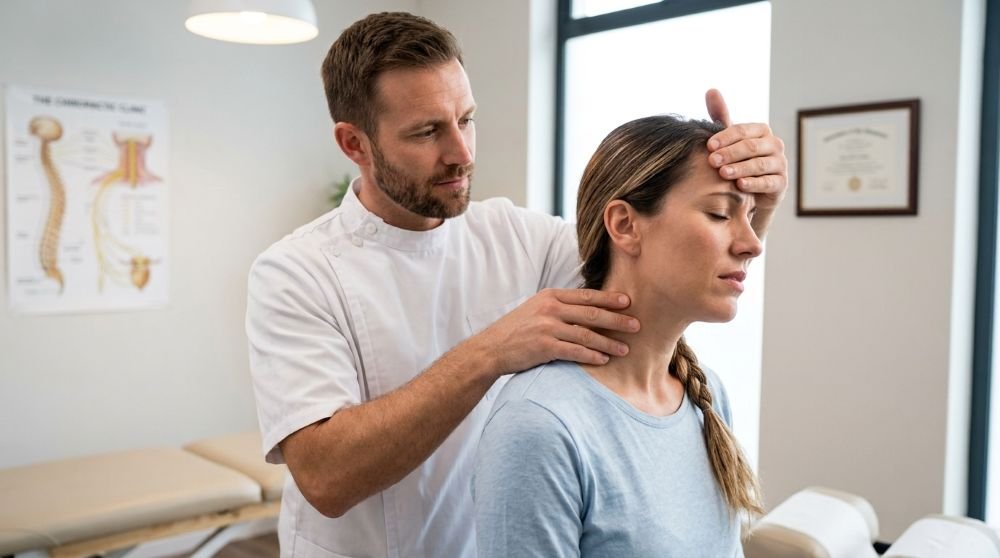
Given the evidence, a chiropractor’s most useful role is a careful assessment and a conservative, low-force plan that fits alongside your medical care.
That typically includes:
- A detailed history. Questions about your headache pattern, triggers, medications, and any diagnosis from your physician help separate migraine from neck-related headaches and flag anything that needs medical referral.
- A physical and neurological exam. Checking neck mobility, posture, muscle tenderness, reflexes, strength, and sensation shows whether the neck is likely contributing.
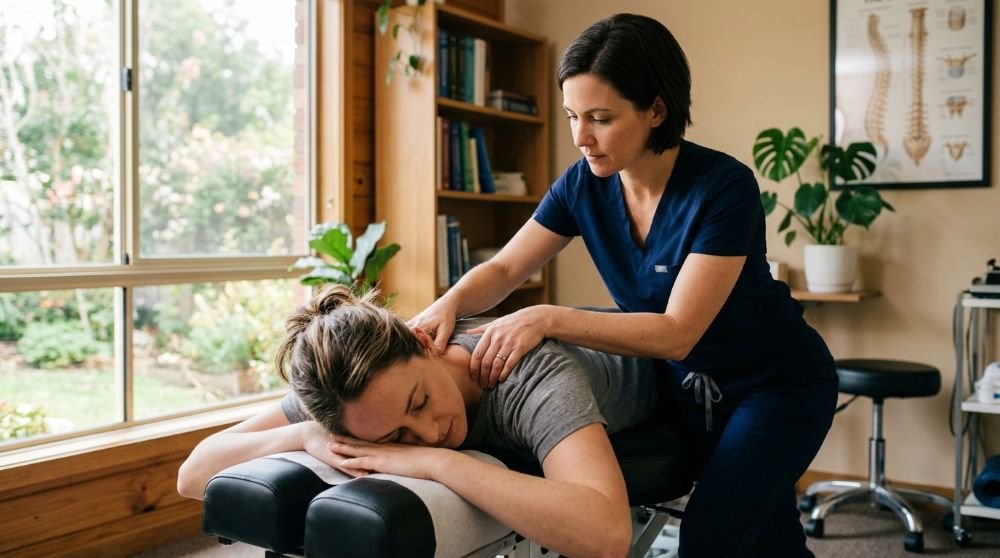
- Gentle hands-on care. Low-force mobilization and soft tissue work can ease neck and upper back tension without forceful twisting.
- Posture and workstation guidance. Long hours with the head pushed forward toward a screen add load to the neck and shoulders.
- Exercise and habit coaching. Strength work, mobility exercises, and sleep and stress routines support the parts of migraine management with the strongest evidence.
If you’ve already had neck imaging, keep in mind that disc changes often appear in people with no symptoms, so a finding on your report doesn’t automatically explain your headaches. Here’s what the difference between a herniated and bulging disc means if those terms show up.
A chiropractor should work with your physician, not replace them. Keep taking any prescribed migraine medication unless your doctor changes the plan.
Is Chiropractic Care Safe for People With Migraine?
For most people, side effects of spinal manipulation are minor and short-lived and can include a temporary headache, tiredness, or soreness in the treated area. Still, safety deserves extra thought with migraine, for two reasons.
First, the benefit is uncertain. A 2024 updated review of six trials concluded that the effectiveness of spinal manipulation for migraine remains unproven, and in the trials it could pool on side effects, people receiving manipulation had about twice the rate of adverse events as comparison groups. When benefit is unclear, even small risks carry more weight.
Second, migraine-focused care centers on the neck. The same review notes reports of rare but serious complications after forceful upper neck manipulation, including injury to the arteries of the neck and stroke. These events are uncommon, and whether manipulation directly causes them is still debated, but they’re a key reason many practitioners favor gentler techniques for headache patients.
Practical safeguards:
- Choose a provider who screens for warning signs before any hands-on treatment.
- Ask which techniques will be used, and know that you can decline neck manipulation.
- Ask about low-force mobilization and soft tissue work, which avoid high-velocity neck thrusts.
- Seek emergency care if you develop sudden, severe neck pain or headache with dizziness, vision changes, slurred speech, or weakness.
Habits That Help Manage Migraine
Lifestyle steps have some of the most consistent support in migraine care, and they pair well with any hands-on treatment.
1. Make Exercise a Regular Habit
In a network meta-analysis of 21 trials, strength training cut monthly migraine days by about three and a half, with high- and moderate-intensity aerobic exercise close behind. Build up gradually, since a sudden jump in intensity can set off an attack for some people.
2. Keep a Steady Sleep and Meal Schedule
Too much or too little sleep and skipped meals are common triggers. Going to bed, waking up, and eating at consistent times, and drinking enough water, helps smooth out those swings.
3. Limit Pain Reliever Days
Frequent use of headache medication can backfire. Taking triptans or combination pain relievers on 10 or more days a month, or simple pain relievers on more than 15, raises the risk of medication overuse headache. If you need medication that often, ask your doctor about a preventive plan.
4. Break Up Long Stretches at Your Desk
Sitting with your head pushed forward for hours strains the neck and upper back. Raise your monitor to eye level, stand and move regularly, and if long workdays also bring on lower back or leg pain, try these sciatica stretches you can do at your desk.
5. Manage Stress Deliberately
Emotional stress is a common trigger, and some people get attacks right after a stressful stretch ends. Relaxation techniques, meditation, yoga, and regular breaks can help.
6. Keep a Headache Journal
Note when each headache starts, how long it lasts, what you ate, how you slept, your stress level, and any medication taken. Patterns become easier to spot, and the record gives your physician and chiropractor useful information.
When a Headache Needs Medical Attention
See a physician first if your headaches are new, changing in pattern, or becoming more frequent or severe, or if they’re increasingly disrupting work, sleep, or daily life.
Call 911 or go to the emergency room if your headache comes on suddenly and explosively, feels like the worst of your life, or follows a head injury, or if you notice:
- Slurred speech, vision changes, confusion, loss of balance, or trouble moving an arm or leg
- Fever, stiff neck, nausea, and vomiting along with the headache
- A headache that starts right after exertion such as weightlifting, running, or sex
- A headache that keeps getting worse over 24 hours
- A severe headache centered in one eye, with redness in that eye
These signs call for medical evaluation before any hands-on care.
Frequently Asked Questions
Can a chiropractor help with migraines?
Possibly, for some people. Small studies suggest a modest drop in migraine days, but a well-designed placebo-controlled trial found sham treatment worked as well. Chiropractic care fits best as a complement to medical care, not a replacement for it.
Can a chiropractic adjustment stop a migraine attack in progress?
There’s little research on this. Most studies looked at preventing attacks over weeks to months. During an attack, resting in a dark, quiet room and following your physician’s treatment plan are usually the first steps.
How long should I try chiropractic care for migraines?
There’s no research-backed number of visits. A sensible approach is a defined trial period, with a headache journal tracking your migraine days, so you and your provider can judge objectively whether care is helping.
What’s the difference between a migraine and a cervicogenic headache?
Migraine is a neurological condition with throbbing pain, often with nausea and sensitivity to light or sound. A cervicogenic headache starts in the neck, usually on one side, and is often brought on by neck movement or awkward posture.
Is it safe to get a neck adjustment if I have migraines?
Most side effects are mild and temporary, but rare serious complications involving the neck have been reported. Ask about gentle, low-force options, and make sure your provider screens for warning signs first.
Should I see a chiropractor or a neurologist for migraines?
Start with a physician, such as your primary care doctor or a neurologist, for diagnosis and medication. A chiropractor can be a useful addition when neck tension, posture, or a possible cervicogenic headache is part of the picture.

Living With Migraines? Book a Gentle Spinal Assessment
Migraine is complex, and no single treatment works for everyone. If neck tension, posture, or headaches that seem to start in your neck are part of your pattern, a careful exam can help clarify what’s going on. Tao Chiropractic in Pasadena starts every new patient with a consultation, a full spinal exam, and orthopedic and neurological testing, with digital X-rays when needed, then builds a headache and migraine care plan around what the exam shows. Care relies on gentle, controlled techniques rather than forceful neck twisting and works alongside your physician’s treatment.
If you want a clearer picture of what’s driving your headaches, schedule a new patient visit.
READ MORE: Why Do I Get Headaches Behind My Eyes? Causes and Relief