

Eight hours at a desk. Commute. Dinner on the couch. A few more hours scrolling. That routine might feel normal, but your spine keeps score.
If you’ve started noticing a sharp, radiating pain from your lower back into your hip or down your leg, prolonged sitting could be part of the problem. Sciatica is increasingly common among office workers, remote employees, drivers, and anyone who spends long stretches seated. The real question is not just whether sitting can contribute to sciatica, but what you can do about it.
KEY TAKEAWAYS
- Prolonged sitting increases lumbar disc pressure and can contribute to sciatic nerve irritation.
- Radiating leg pain, tingling, or numbness are hallmark sciatica symptoms.
- Poor posture and tight hip muscles often play a significant role.
- Sciatica chiropractor treatment focuses on correcting spinal mechanics, not just masking pain.
- Early intervention reduces the risk of chronic nerve inflammation.
CONTENTS
Can Sitting All Day Really Cause Sciatica?
Why Sciatica Pain Often Feels Worse While Sitting
Is It Sciatica or Just Lower Back Pain?
How Sciatica Chiropractor Treatment Addresses the Root Cause
How to Prevent Sciatica If You Sit All Day
How Long Does Sitting-Related Sciatica Last?
Schedule a Sciatica Evaluation at Tao Chiropractic
What Is Sciatica?
Sciatica is not a standalone condition. It is a symptom that occurs when the sciatic nerve becomes irritated or compressed.
The sciatic nerve is the largest nerve in the body. It originates in the lower spine, travels through the hips and buttocks, and extends down each leg. When something compresses or inflames this nerve, pain follows its path.
According to studies, sciatica most commonly occurs when a herniated disc, bone spur, or spinal narrowing compresses part of the nerve, leading to inflammation and pain.
Common Sciatica Symptoms
- Sharp, shooting pain radiating down one leg
- Burning or tingling sensations
- Numbness in the leg or foot
- Muscle weakness
- Pain that worsens when sitting
If the discomfort travels below the knee, it is more likely to be true sciatica rather than general lower back pain.
What Causes Sciatica?
Several underlying conditions can trigger sciatic nerve irritation:
- Herniated or bulging discs
- Spinal stenosis (narrowing of the spinal canal)
- Degenerative disc disease
- Spondylolisthesis
- Piriformis syndrome
Disc herniation is one of the most common causes of sciatica, particularly in males between 30 and 50 year olds.
Can Sitting All Day Really Cause Sciatica?
Sitting alone is not a direct cause of sciatica in every case. However, prolonged sitting significantly increases risk factors and mechanical stress that contributes to them.
Increased Pressure on the Lumbar Spine
Research in spinal biomechanics shows that sitting increases pressure on lumbar discs more than standing. When seated, especially with poor posture, the lumbar spine flexes forward. This position pushes disc material backward, toward the spinal nerves.
Over time, this repeated stress may contribute to disc bulging or herniation.
The Desk Job and Herniated Discs
When you sit with a rounded lower back, the posterior portion of spinal discs absorbs the majority of the load. Repetitive flexion under load can increase disc strain and risk of injury. If a disc protrudes enough to contact the sciatic nerve root, pain radiates down the leg.
Tight Hip Flexors and Piriformis Syndrome
Long periods of sitting shorten the hip flexors and reduce glute activation. This muscular imbalance can irritate the piriformis muscle, which lies close to the sciatic nerve.
When the piriformis becomes tight or inflamed, it may compress the nerve. This condition is known as piriformis syndrome, and it can mimic disc-related sciatica.
Poor Ergonomics Compound the Problem
- Low chairs without lumbar support
- Laptops positioned too low
- Leaning forward for extended periods
- Crossing legs consistently
These habits increase asymmetrical stress on the lower spine.
So while sitting is not a guaranteed cause, it absolutely contributes to structural stress that may trigger sciatica.
Why Sciatica Pain Often Feels Worse While Sitting
Many patients notice that standing or walking eases their symptoms, while sitting makes them worse. There are physiological reasons for that.
Increased Intradiscal Pressure
Studies show intradiscal pressure rises significantly when sitting, especially with slouched posture. Higher pressure can aggravate an already irritated disc and compress nearby nerve roots.
Narrowed Foraminal Spaces
The spinal openings where nerves exit can narrow in certain seated positions. If inflammation is already present, even slight narrowing can intensify symptoms.
Reduced Circulation
Prolonged sitting reduces blood flow to muscles and nerves. Limited circulation can slow healing and prolong inflammation.
If your pain spikes when you sit for 30 minutes or more, it is not random. It is mechanical.
Is It Sciatica or Just Lower Back Pain?
Not every ache in the lower back is sciatica. The pattern of symptoms matters.
| Feature | Lower Back Pain | Sciatica |
| Pain Location | Usually localized to the lower back | Radiates from the lower back into the buttock and down the leg |
| Pain Quality | Often dull, aching, or stiff | Sharp, shooting, burning, or electric-like |
| Radiation Below the Knee | Rare | Common |
| Neurological Symptoms | Typically absent | May include tingling, numbness, or pins-and-needles sensations |
| Muscle Weakness | Uncommon | Can occur in the affected leg or foot |
IMPORTANT:
If symptoms include progressive leg weakness, loss of bowel or bladder control, or severe worsening pain, seek immediate medical evaluation. In most situations, early assessment and proper treatment reduce the risk of chronic nerve irritation and long-term complications.
How Sciatica Chiropractor Treatment Addresses the Root Cause
Medication may dull the pain. Rest might reduce symptoms temporarily. But if spinal mechanics remain unchanged, the irritation often returns.
That is where targeted sciatica chiropractor treatment comes in.
Comprehensive Evaluation
At Tao Chiropractic, evaluation begins with:
- Postural assessment
- Neurological and orthopedic testing
- Range of motion analysis
- Identification of disc, joint, or muscular involvement
The goal is to determine the structural source of nerve irritation.
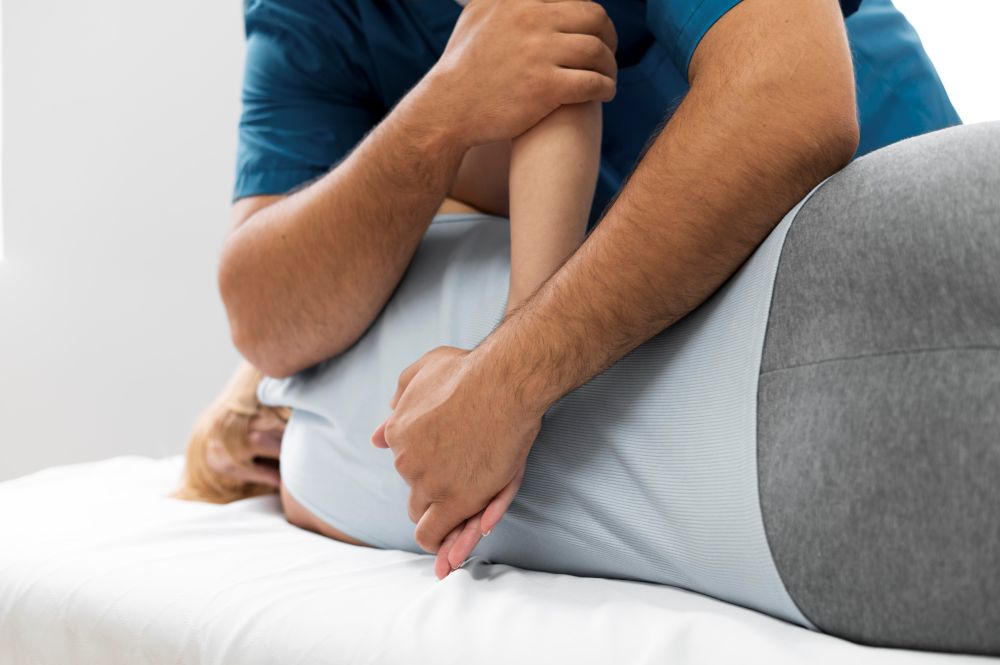
Spinal Adjustments
Chiropractic adjustments aim to:
- Improve joint alignment
- Reduce mechanical stress on discs
- Restore normal spinal motion
- Decrease nerve root pressure
Corrective Exercise
Sustainable recovery requires muscle balance.
Treatment plans may include:
- Core stabilization exercises
- Hip mobility drills
- Glute strengthening
- Postural retraining
These reduce the likelihood of recurrence.
Soft Tissue Therapy
Addressing muscular tension is equally important. Myofascial release and targeted muscle therapy can relieve piriformis tension and restore balanced movement.
Ergonomic Coaching
Patients who sit for work receive practical guidance:
- Proper chair height
- Lumbar support positioning
- Monitor alignment
- Scheduled movement breaks
Effective sciatica chiropractor treatment does not stop at symptom relief. It corrects mechanics.
How to Prevent Sciatica If You Sit All Day
If your job requires sitting, prevention becomes essential.
Follow the 30 to 60 Minute Rule
Stand up every 30 to 60 minutes. Even brief movement restores circulation and reduces disc pressure.
Adjust Your Workstation
- Keep hips slightly higher than knees
- Maintain neutral spine posture
- Use lumbar support
- Position screens at eye level
Strengthen the Posterior Chain
Weak glutes and core muscles increase lumbar strain. Incorporate:
- Planks
- Bridges
- Hip abduction exercises
Seek Early Care
Address mild symptoms early. Waiting until nerve irritation becomes severe makes recovery longer and more complex.
How Long Does Sitting-Related Sciatica Last?
Acute sciatica may resolve within several weeks. However, chronic mechanical stress from sitting can prolong inflammation.
Recovery time depends on:
- Severity of nerve compression
- Underlying disc health
- Postural habits
- Consistency of treatment
Early chiropractic evaluation improves outcomes.
Frequently Asked Questions
Can sitting too much cause sciatica permanently?
Sitting itself does not permanently cause sciatica, but prolonged poor posture can contribute to disc damage or nerve irritation that becomes chronic without treatment.
How do I know if my sciatica is from a herniated disc?
Imaging and clinical examination help determine this. Radiating pain below the knee and neurological symptoms often indicate disc involvement.
Is chiropractic care safe for sciatica?
For many patients, chiropractic care is a safe, non-invasive option. A proper evaluation determines whether spinal adjustments are appropriate.
Should I rest or stay active with sciatica?
Light activity is generally better than prolonged bed rest. Movement promotes circulation and healing.
How many chiropractic sessions are needed for sciatica?
Treatment frequency depends on severity and underlying cause. Some patients improve within weeks, while others require a structured rehabilitation plan.
Schedule a Sciatica Evaluation at Tao Chiropractic
If sitting triggers leg pain, numbness, or weakness, it is time to identify the source. Ignoring symptoms allows inflammation to progress and recovery to become more complicated.
At Tao Chiropractic, sciatica chiropractor treatment is personalized to address disc stress, joint dysfunction, and muscular imbalance. The goal is lasting relief and improved spinal health, not temporary patches.
Book a consultation today and take control of your spine before prolonged sitting takes control of you.