

Quick Guide
- TMJ disorder affects the jaw joint and surrounding muscles.
- Jaw pain and clicking are common early warning signs.
- TMJ problems can trigger headaches, ear pain, and facial tension.
- Teeth grinding and jaw misalignment are major contributing factors.
- Early evaluation and treatment may prevent long-term joint damage.
What’s Inside This Guide
10 Common Signs of TMJ Disorder
When to Seek Professional Help
Jaw pain is easy to dismiss. Many people assume it’s stress, a dental issue, or something temporary that will eventually go away. But persistent jaw discomfort can signal a more complex problem involving the temporomandibular joint (TMJ).
This joint connects the jawbone to the skull and allows essential movements such as speaking, chewing, and yawning. When the joint becomes irritated, misaligned, or inflamed, it can lead to temporomandibular joint disorder (TMD).
Recognizing early symptoms matters. Left untreated, TMJ problems can worsen and affect daily activities, sleep quality, and overall comfort. Below are ten common signs that may indicate a TMJ disorder.
What Is TMJ Disorder?
TMJ disorder refers to a group of conditions affecting the temporomandibular joint and surrounding muscles. These joints sit on both sides of the head, just in front of the ears.
Healthy TMJs allow smooth jaw movement. However, when there is jaw misalignment, inflammation, muscle tension, or joint damage, the movement becomes restricted or painful.
Common contributing factors include:
- Teeth grinding (bruxism)
- Jaw injuries
- Arthritis in the joint
- Chronic stress leading to jaw clenching
- Bite misalignment
- Postural issues affecting neck and jaw mechanics
Understanding the causes of TMJ pain helps identify the warning signs early.
10 Common Signs of TMJ Disorder
1. Persistent Jaw Pain or Tenderness
The most obvious sign of TMJ disorder is ongoing pain in the jaw joint.
This discomfort may:
- Appear near the ears
- Worsen when chewing
- Feel like soreness or pressure
- Spread toward the neck or shoulders
Pain often fluctuates but rarely disappears completely without treatment.
2. Clicking or Popping Sounds in the Jaw
A clicking or popping noise when opening the mouth is one of the most recognizable symptoms of TMJ disorder.
These sounds occur when the cartilage disc inside the joint shifts out of its normal position.
Occasional clicking without pain is common, but frequent sounds combined with discomfort usually indicate a joint issue.
3. Jaw Stiffness or Limited Movement
People with TMJ disorder often experience restricted jaw mobility.
You might notice:
- Difficulty opening your mouth fully
- A tight or locked jaw
- Limited side-to-side movement
In severe cases, the jaw may temporarily lock in either the open or closed position.
4. Frequent Headaches
Many patients are surprised to learn that TMJ and headaches are closely connected.
Tension in the jaw muscles can trigger headaches that resemble migraines or tension headaches.
These headaches often:
- Begin near the temples
- Worsen after chewing or talking
- Occur alongside jaw tightness
Because the jaw and skull share muscle networks, dysfunction in one area can affect the other.
5. Ear Pain or Pressure
TMJ problems frequently mimic ear infections.
People may feel:
- Earaches without infection
- A sensation of fullness in the ear
- Ringing in the ears (tinnitus)
This happens because the jaw joint sits directly beside the ear canal, meaning inflammation can radiate into nearby structures.
6. Pain While Chewing
Another common sign of TMJ disorder is difficulty chewing certain foods.
Symptoms may include:
- Jaw fatigue when eating
- Pain while biting down
- Uneven chewing pressure
Some people subconsciously avoid using one side of the mouth, which can worsen joint imbalance.
7. Facial Pain or Muscle Tension
TMJ disorders often cause tightness in the surrounding facial muscles.
This discomfort may extend to:
- The cheeks
- The temples
- The neck and upper shoulders
Muscle strain typically develops when the jaw works harder to compensate for joint dysfunction.
8. Teeth Grinding or Jaw Clenching
Chronic teeth grinding, known as bruxism, is a major contributor to TMJ disorder.
Grinding places significant pressure on the jaw joint, often occurring during sleep or stressful situations.
Signs of grinding include:
- Worn-down teeth
- Morning jaw soreness
- Tight facial muscles
Addressing grinding habits is often necessary to reduce TMJ pain.
9. Bite Changes or Jaw Misalignment
Jaw misalignment explained simply: the upper and lower teeth no longer meet properly when closing the mouth.
People may notice:
- Teeth feeling “off” when biting
- A shift in jaw position
- Uneven pressure across teeth
Misalignment can develop gradually and may indicate structural issues within the joint.
10. Neck or Shoulder Pain
The jaw does not work in isolation. It connects to muscles throughout the head, neck, and upper spine.
When TMJ dysfunction develops, the surrounding muscles compensate, leading to:
- Neck stiffness
- Shoulder tension
- Reduced head mobility
This is one reason why TMJ pain chiropractic treatment can be helpful for addressing underlying musculoskeletal imbalance.
What Causes TMJ Pain?
Several factors can trigger or worsen TMJ disorder. Often, the condition develops due to multiple contributing issues rather than a single cause.
Common causes include:
- Chronic teeth grinding
- Jaw trauma or injury
- Arthritis affecting the joint
- Poor posture (especially forward head posture)
- Stress-related muscle tension
- Bite irregularities or dental issues
Lifestyle habits and spinal alignment can significantly influence jaw mechanics.
When to Seek Professional Help
Occasional jaw discomfort can happen to anyone. However, persistent symptoms should not be ignored.
You should consider professional evaluation if you experience:
- Jaw pain lasting more than a few weeks
- Difficulty opening or closing the mouth
- Chronic headaches linked to jaw tension
- Clicking or popping with pain
- Locking of the jaw joint
Early treatment can prevent the condition from becoming more severe.
Chiropractic care often focuses on restoring proper alignment in the jaw, neck, and spine, which may help reduce strain on the temporomandibular joint.
Clinics such as Tao Chiropractic provide evaluation and TMJ-focused care aimed at improving joint function and relieving discomfort.
Frequently Asked Questions
What is TMJ disorder?
TMJ disorder refers to problems affecting the temporomandibular joints, which connect the jaw to the skull. The condition can cause pain, restricted movement, clicking sounds, and muscle tension in the face and neck.
Can TMJ disorder cause headaches?
Yes. TMJ dysfunction often leads to headaches because the jaw muscles connect to the temples and surrounding structures. Muscle tension and joint irritation can trigger recurring headaches.
What causes TMJ pain?
TMJ pain can develop due to teeth grinding, jaw injuries, arthritis, poor posture, stress-related muscle tension, or bite misalignment.
Can a chiropractor treat TMJ disorder?
Chiropractors may help manage TMJ symptoms by addressing jaw alignment, neck posture, and surrounding muscle tension, which can reduce stress on the temporomandibular joint.
When should I see a doctor for TMJ symptoms?
You should seek professional care if jaw pain persists for several weeks, your jaw locks, chewing becomes painful, or headaches frequently accompany jaw discomfort.
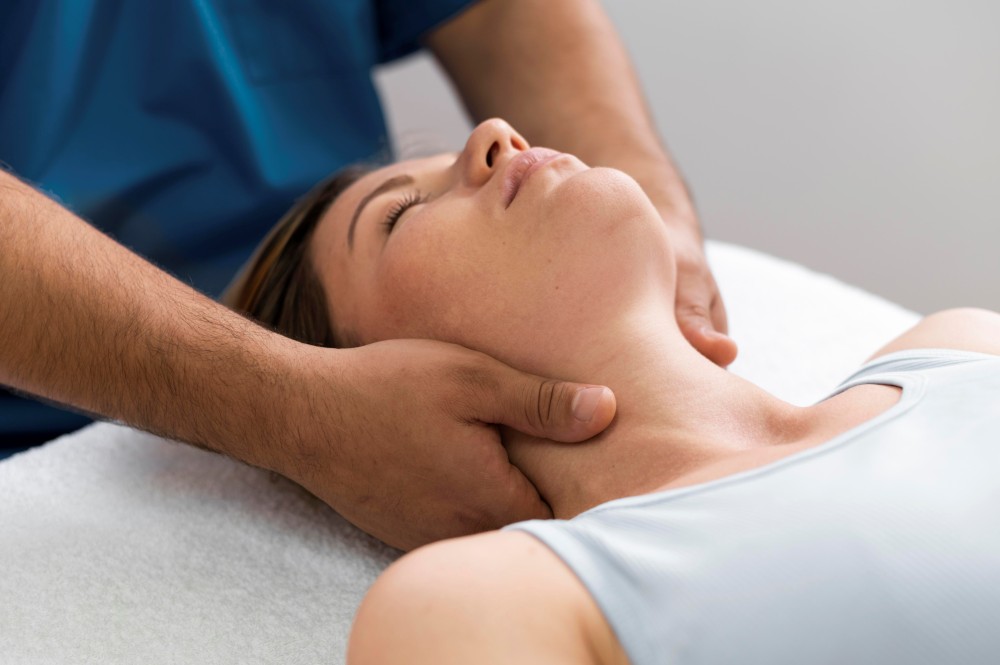
Get Relief from TMJ Pain
Persistent jaw pain, headaches, or clicking sounds are not problems you should simply tolerate. These symptoms often indicate underlying joint dysfunction that may worsen over time.
A professional evaluation can help identify the root cause and determine whether TMJ pain chiropractic treatment may help restore proper function.
If you are experiencing signs of TMJ disorder, book an assessment with Tao Chiropractic and get a clear plan to address the problem before it becomes harder to treat.